
Thinking, thanking, and philosophy
My AKC essay on the role of philosophy as a mode of thinking

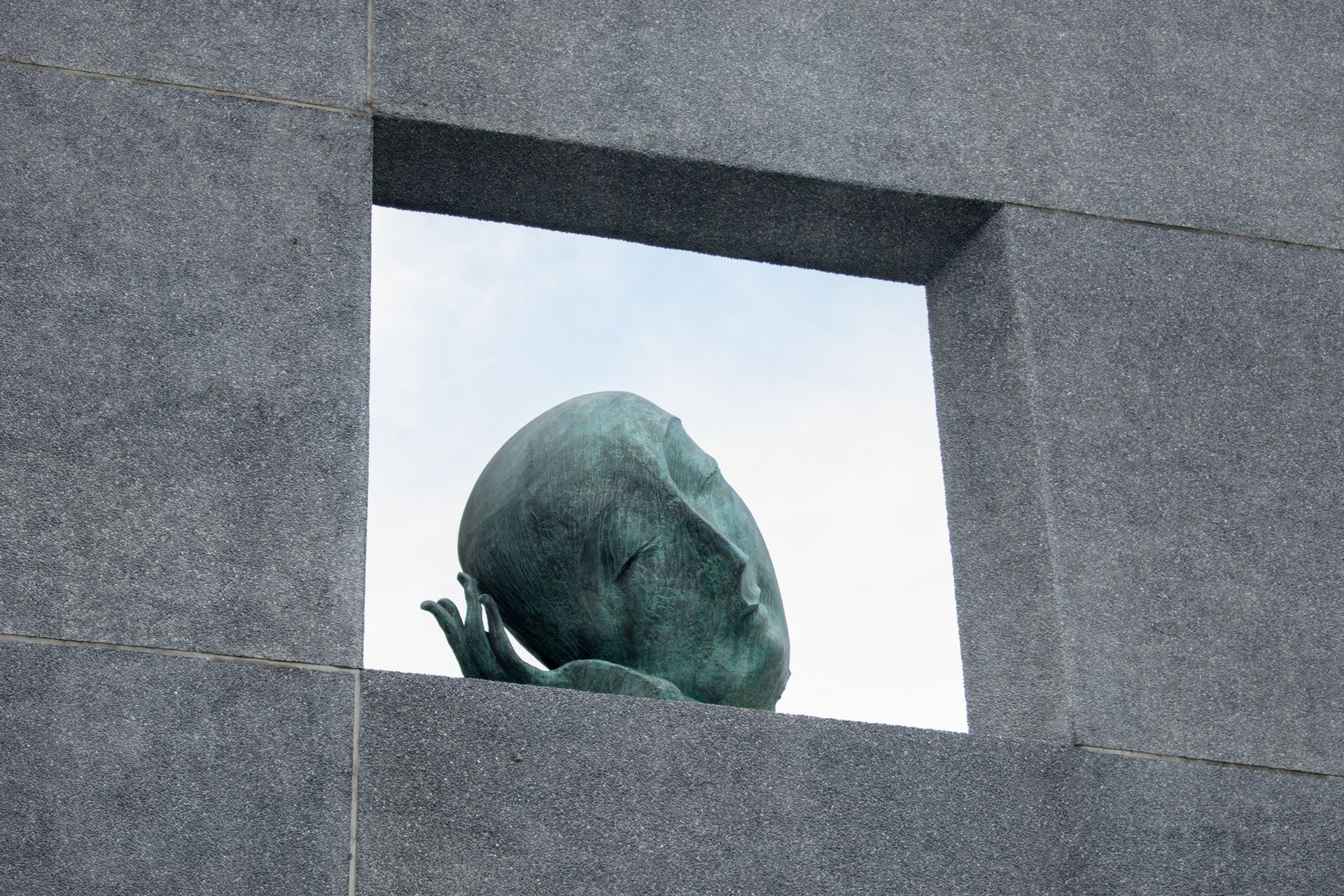
This essay won the Leathes Prize as part of the Associateship of King’s College London (AKC) essay writing competition. You can listen to the AKC podcast, including many lectures, on all popular platforms.
Thinking is frequently understood as a tool used to achieve a certain goal. To challenge this assumption, I draw on King-Ho Leung’s work on rethinking the purpose of thinking, which distinguishes three distinct modes of thinking: problem-solving, critique, and thinking as devotion. After outlining Leung’s model, I argue that thinking as devotion could be a category that can apply to all modes of thinking, and that philosophy might constitute a further mode of thinking, as exploration.
Thinking as problem-solving is aimed at something outside of itself, as a means to an end. The goal is to solve a specific problem and then move on. According to Robert W. Cox, thinking as problem-solving starts from the world as it is initially understood. It accepts the status quo, without questioning any background assumptions, and tries to resolve issues within the given framework. A simple example Leung uses is deciding which restaurant one wants to go to for dinner.
In contrast, critical thinking or critique questions the framework and its underlying assumptions. It is the question of why one should eat at a restaurant in the first place, rather than cooking at home. So, critique can also be understood as a means to an end, as already entailing problem-solving, but it does not accept the status quo and starts from different assumptions. In addition, critique can be critique for its own sake, which ironically makes it the status quo, thus becoming uncritical again. Rita Felski claimed that critique must always be a critique of something, so that it cannot be its own goal. For that reason, critique resembles problem-solving in shape.
According to Leung, thinking as devotion differs from both problem-solving and critique. It is best understood through the etymological link between ‘think’ and ‘thank’ in Old English, as discussed by Martin Heidegger. Thinking as thanking is the highest form of thinking, and it pertains to taking the world as a given, as a gift for humanity, while simultaneously calling into question why anything exists in the first place.
For G. K. Chesterton and Heidegger, the purpose of thinking is to recover the sense of wonder that the world exists, as a form of ‘existential gratitude’. Put simply, it involves directing our thoughts at that which is most worthy of our thinking. One possible aim of such thinking throughout history was God, as ‘that than which nothing greater can be thought’. This is reminiscent of Baruch Spinoza’s amor Dei intellectualis, the intellectual love of God, where one recognises God as the necessary, eternal cause of all things. Certainly, this is not the only possible aim of thinking as devotion. It could be pointed towards whatever it is that gives our life meaning, purpose, or value, and many candidates could plausibly play such a role.
Considering that the question of why anything exists at all is sometimes taken to be the central question of philosophy, I will now evaluate how philosophy relates to thinking as devotion. Philosophy, as I see it, is arguably the most paradigmatic example of pure thinking applied to the world. Before that, though, I want to evaluate whether Leung’s threefold model of modes of thinking is complete.
My main observation on Leung’s model is that thinking as devotion could be applied to problem-solving and critique as well. One might think that what is most worthy of our thought is problem-solving as a means to an end, within a framework deemed ultimately valuable. In fact, Christian apologists like Chesterton could be interpreted as taking the framework of Christianity, and problem-solving within it, as most worthy of our thought. Similarly, one might think that critiquing a general framework and dismantling it is most worthy of our thought, like the fight for a more just world, without an oppressive political order.
So, I question whether thinking as devotion really is a distinct mode of thinking, rather than a category applicable to all modes of thinking. If thinking as thanking involves no problem-solving or critique, but only curiosity and wonder directed at what exists, then it can remain a separate category. Without an explicit external aim, it could simply be about taking something valuable or meaningful as an object of contemplation. However, would it then amount to a very thin and underdefined conception of thinking, where just having an object of thought and gratitude completely exhausts its role? I find it more plausible that anything could be a genuine aim of thinking as devotion, so it subsumes problem-solving and critique as well.
Furthermore, I believe that there is another mode of thinking not identified by Leung, concerned not with accepting a framework and solving problems within it, as per Cox, not with critiquing frameworks and their underlying assumptions, as per Felski, but with building and conceptualising frameworks in the first place. This I see as the primary role of philosophy, and I call it exploratory thinking. It is about discovering what concepts and possibilities exist, as well as clarifying, sharpening, and evaluating how they cohere with each other, in various combinations and contexts.
Exploratory thinking can be understood as what happens when thinking as devotion loops back into itself, where what is most worthy of thought becomes not something external, like God, but rather thinking itself. It is when thought is taken as the worthiest object of thought. What gives thinking purpose, then, is the fact that one can think and interpret the world, so that one is devoted to and grateful for thinking as an activity as such. The result of this is not some vicious form of circularity, but a concern with conceptual coherence that uncovers epistemic possibilities. In simpler terms, it is an exercise through which one discovers what can be defined in the first place and, accordingly, what possibly exists and can be known.
While I was a doctoral student at King’s College London, my primary supervisor was David Papineau. I distinctly remember the expression on his face while he was thinking about my thesis. To me, it seemed like he was playing with ideas, easily connecting and disconnecting them, and then he would casually make a thoroughly insightful, albeit devastating comment about my writing. In my mind, this memory exemplifies exploratory thinking. Reflecting on it made me realise that I am less interested in finding the correct framework, and more in attaining this level of thought, where great insights and epistemic possibilities are within reach. Perhaps the aim of thinking as devotion then should not be to find the object most worthy of our thought, but rather to see thinking itself as most worthy of our devotion.
Bibliography
Chesterton, G. K. (1908). Orthodoxy. London: John Lane.
Cox, Robert W. (1981). “Social Forces, States and World Orders: Beyond International Relations Theory.” Millennium: Journal of International Studies, 10(2), 126–155.
Felski, Rita. (2015). The Limits of Critique. Chicago and London: University of Chicago Press.
Heidegger, Martin. (1954/1968). What Is Called Thinking? New York: Harper & Row.
Leung, King-Ho. (2025). “Re-thinking the Purpose of Thinking.” King’s College London AKC lecture.
Spinoza, Baruch. (1677/1994). Ethics. Princeton, NJ: Princeton University Press.
Williams, Thomas. (2023). Anselm of Canterbury. Stanford Encyclopedia of Philosophy. https://plato.stanford.edu/entries/anselm/.
in my experience those who spend little time thinking are also those least thankful for their existence.
The fact that gratitude emerges from direct contact between our mind and its Umwelt does support the idea that all thinking is of the thanking nature 🥰